
Why Elevators Are the Key Challenge for Robots in Buildings
As service robots become increasingly common in hotels, hospitals, and office buildings, more and more businesses are exploring how to use robots to solve labor shortages, improve service efficiency, and offer differentiated customer experiences. However, no matter how advanced a robot’s mobility or navigation capabilities may be, when it comes to moving between floors, nearly every robot faces the same obstacle: the elevator.
Elevators were originally designed to serve people, not machines. Their control systems, call buttons, and door mechanisms all assume a human is operating them—pressing buttons, waiting, and stepping in and out. For a robot, this seemingly simple action of “getting from one floor to another” turns out to be one of the most complex and critical challenges in real-world deployment.
Why is riding an elevator so difficult for robots?
1. Lack of a standardized communication interface
Different elevator brands and models use different control protocols, and most legacy elevators were never designed with external systems or IoT connectivity in mind. Without a communication bridge, robots simply cannot proactively call an elevator, select a floor, or receive real-time elevator status information.
2. Physical operation limitations
Even if a robot is equipped with a mechanical arm or actuator to physically press buttons, this approach is prone to failure, requires custom-fitting for every button panel design, and cannot respond flexibly when a building’s interior gets renovated or elevators are replaced.
3. Scheduling and safety risks
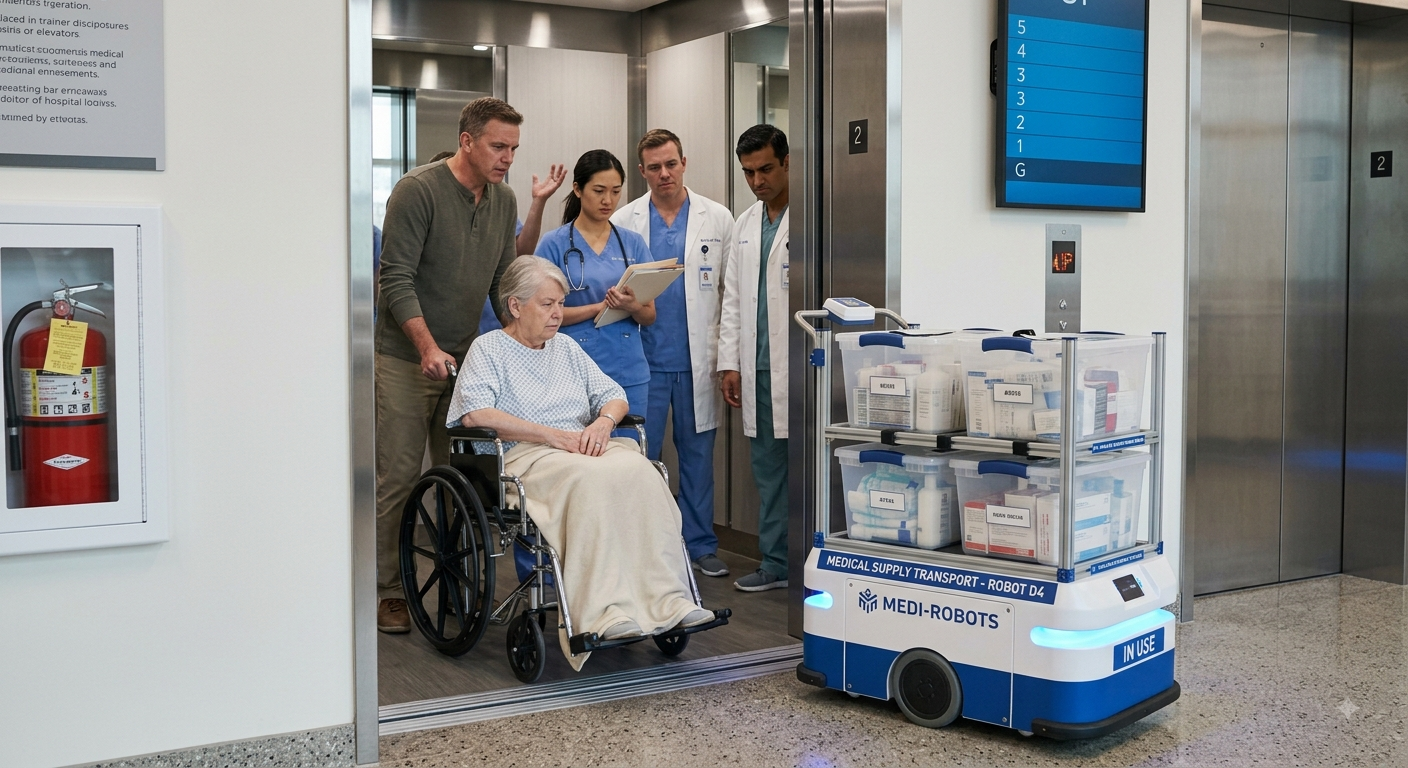
Robots and human passengers riding the same elevator can create scheduling conflicts, safety concerns, and privacy issues. Without an intelligent system to coordinate priorities and calculate optimal boarding timing, robots may block elevator doors, delay building traffic, or even cause safety incidents.
4. High cost of full elevator replacement
For most building owners, replacing existing elevators with new “smart” models capable of robot integration would be a huge capital expenditure and an impractical short-term solution, especially for properties with many floors or multiple elevator banks.
LiftMind: bridging the gap between robots and elevators
To address these fundamental barriers, Owlsome Tech developed LiftMind, an elevator AIoT middleware solution purpose-built for smart buildings and robotic applications. Through a modular hardware design and a flexible API architecture, LiftMind can be retrofitted onto elevators of virtually any brand or model—without modifying the elevator’s core mechanical structure—quickly enabling elevator calling, floor selection, and door status feedback through digital communication.
At the same time, LiftMind supports integration with mainstream robot platforms and frameworks (such as ROS and FMS), allowing service robots to autonomously call elevators, coordinate ride scheduling with other passengers, and precisely navigate to the correct floor—achieving true end-to-end, multi-floor automation.
Real-world value across scenarios
Hotels & Hospitality: Delivery robots and room-service robots can autonomously travel across floors to deliver items directly to guest rooms, providing round-the-clock service without relying on additional staffing.
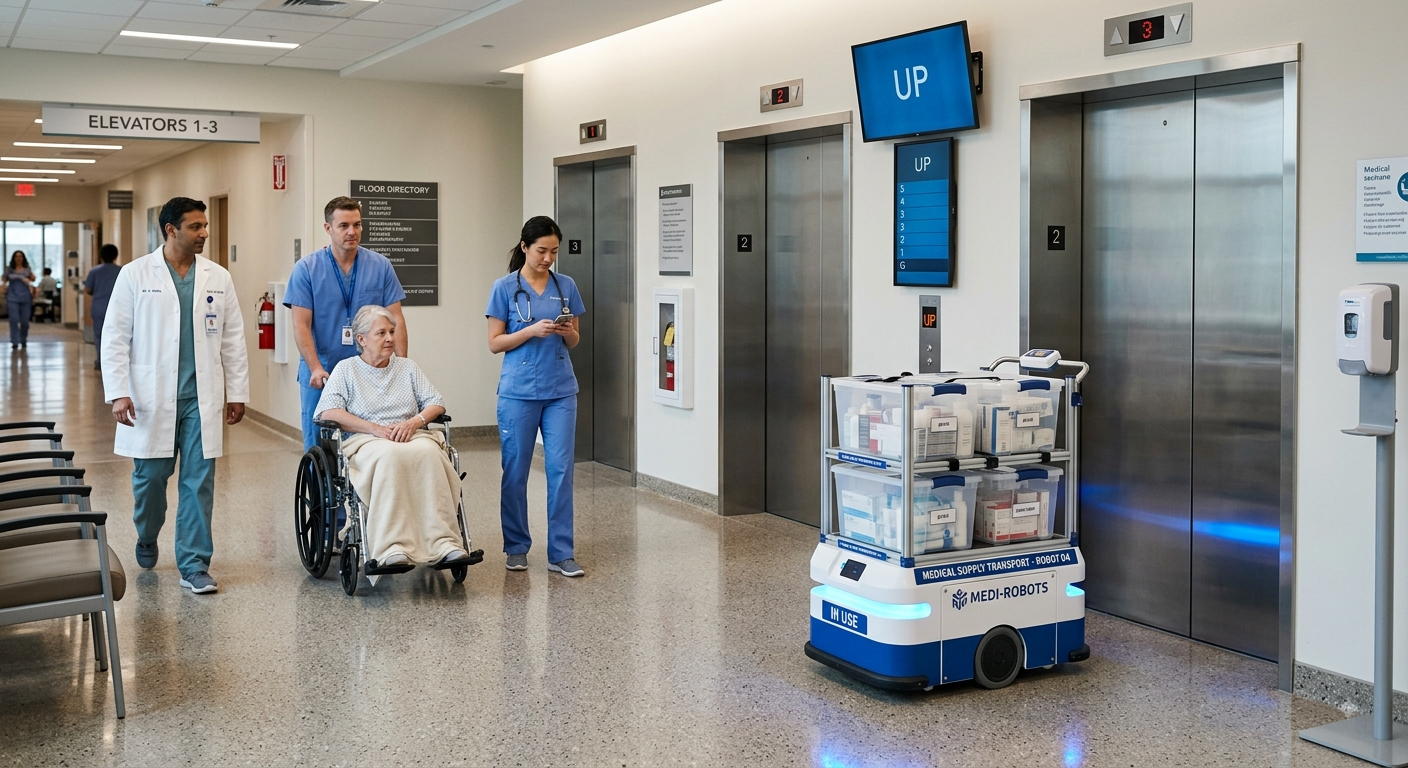
Healthcare Facilities: Medical logistics robots can transport medication and specimens across departments and floors, following configurable priority-access rules to ensure critical medical materials are never delayed by elevator congestion.
Office Buildings: Delivery and courier robots can complete the “last mile” of indoor logistics automatically, improving efficiency without disrupting daily building operations.
Manufacturing & Warehousing: Autonomous Mobile Robots (AMRs) can move materials between floors in multi-level facilities, reducing manual handling and streamlining production workflows.
A necessary step toward true automation
Elevators are often the “final piece of the puzzle” preventing robots from achieving full building coverage. Without solving the elevator challenge, a robot’s usefulness remains confined to a single floor, unable to deliver on the promise of end-to-end automated service.
Owlsome Tech believes that as smart buildings and service robotics continue to evolve together, elevator integration will become an indispensable layer of infrastructure—much like Wi-Fi or building access control systems are today. By offering a fast, low-cost, and highly compatible upgrade path, LiftMind aims to remove this critical barrier, empowering more robots to move freely and intelligently through the vertical dimension of our buildings.