

“Vertical” Marketing: Exploring the Enormous Potential of Elevator Media
We often hear geographers discuss the impact of “time–space compression” on urban life, yet rarely does anyone explore the time-space compression of vertical movement. Vertical movement, especially the elevator as a vertical transportation tool, is often overlooked in discussions of time-space compression. However, its impact on urban life should not be underestimated. Compared to stairs, elevators can almost be considered a form of mass transit, and just like horizontal transportation technologies, they can achieve the compression of time and space that creates what we call “efficiency.” It is almost the only vertical transportation tool in urban life, no less important than horizontal transportation systems like railways and metros.
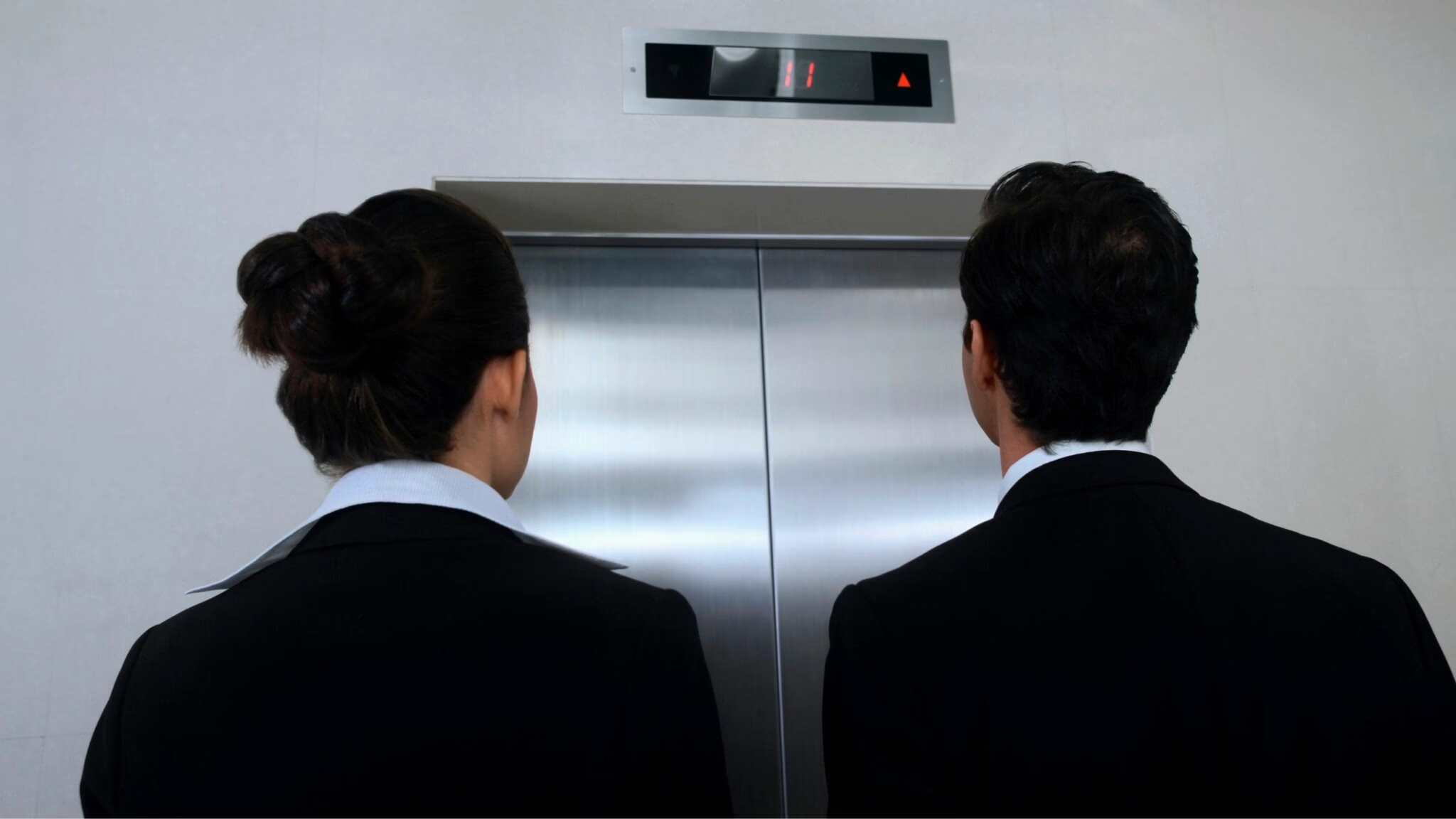
Unlocking the power of elevator advertising in the city
Elevators carry the daily routines of crowds—those 3 to 5 minutes that urban dwellers must pass through every day, unavoidably. As the times evolve, this has fostered new media applications beyond vertical movement itself. In 1998, Canadian digital media company Captivate could be considered the beginning of elevator media—founder Mike DiFranza observed that people try to avoid interaction while riding elevators, and proposed installing screens to ease this awkwardness, installing the first elevator screen in a Boston hotel; this gave rise to the media format of installing screens in elevators. In recent years, as technology has developed and consumer behavior has changed, traditional advertising media face new challenges. In this era of media saturation, advertisers are constantly seeking innovative advertising methods to capture consumers’ attention. Against this backdrop, elevator advertising has become an emerging field. Because the elevator space creates a special time-space context: it is an environment you “must pass through” and cannot escape—the unstable network signal inside the elevator car, the narrow space, and the awkward atmosphere among strangers all make any message inside the space more attention-grabbing, and elevator advertising audiences show higher attention levels, giving advertisers more confidence in reaching their communication goals.
Targeting advantage: providing more customized experiences for different venues and audiences

The spatial characteristics inside an elevator allow advertising to use both visual and auditory elements simultaneously to convey messages. Not only can it present attractive visual effects, but sound can also dissolve the awkward silence. Compared to other media formats, elevator advertising offers a relatively undisturbed viewing environment. In addition, elevator advertising placement can be targeted based on different locations and purposes—for example, medical-related ads in hospitals, business service ads in commercial buildings—making the potential advertising value of elevators increasingly valued. The advertising screens inside elevators have become a new opportunity for advertisers to reach users’ hearts. But when placing elevator ads, advertisers need to pay more attention to how content is presented—traditional ad content is hard to convey within the limited elevator ride time. Therefore, advertisers need to carefully design concise, interesting, and engaging content to increase user acceptance of the ad.
High reach rate: elevator ads can quickly reach a large target audience. Whether residents of high-rise buildings, commuters, or shoppers, all come into contact with the advertising messages inside the elevator.
Combined audio-visual advantage: conveying messages through both sight and sound. Not only can it present attractive visual effects, but sound can also attract the audience’s attention, enhancing the ad’s memorability.
Reinforcing brand image: elevator ads are played in an enclosed space, allowing the ad to convey brand image and messages more focused. After prolonged exposure, the audience forms a deeper impression of the brand and product in the ad.
Targeting advantage: elevator advertising placement can be targeted based on different locations and purposes—for example, hospitals and hospitality each have different audiences, and commercial buildings can display relevant service ads to more precisely attract target audiences.
Undisturbed viewing environment: compared to other media formats, elevator advertising offers a relatively undisturbed viewing environment. Passengers waiting for the elevator usually have no other entertainment or activities, making it easier to focus on the ad.
Data collection and effectiveness evaluation: elevator advertising media platforms can evaluate ad effectiveness through data collection, understanding metrics like view rate and reach rate, thereby optimizing ad content and placement strategy to improve advertising effectiveness.
Using data to improve the precision of elevator media
As AI and data analytics technology continue to develop, elevator advertising will become smarter and more personalized. Applications developed by the LiftMind elevator intelligence system evaluate ad effectiveness through data collection, tracking metrics like view rate and reach rate by crowd, time, and floor, using feedback data to evaluate effectiveness and refine placement strategy to improve results. In the future, advertising systems may even instantly identify user characteristics and interests, pushing content that better matches user needs for more precise targeting.
In recent years, we have gradually deployed to various venues such as healthcare facilities, hospitality, and office buildings—everyone can become a platform for selling advertising through the cloud management platform. The elevator will no longer just be a public facility that costs money every month, but will have additional value—whether promoting personalized brand media content, achieving two-way communication between brand and passenger, or serving as an investment where interested advertisers and brands can purchase ad slots to generate profit.
However, as elevator advertising rises, attention must also be paid to user privacy and excessive ad placement. Advertisers need to follow relevant regulations and ethical guidelines, ensure users’ personal information is properly protected, and avoid excessive ad placement causing user resentment.
Overall, elevator advertising as a new vertical advertising trend has unlimited possibilities. As technology continues to advance and innovate, elevator advertising applications still have much room for development. Elevator owners and advertisers should closely monitor developments in this field, discovering more innovative opportunities. Elevator advertising indeed has good feasibility—it can effectively reach target audiences, and by combining multiple media elements, it can create an attractive advertising effect, bringing more exposure and brand value.