
Taiwan, the “Earthquake Island” at a Tectonic Plate Boundary: Facing Nature’s Challenges with Technology
Have you ever wondered what regulations exist for elevators in earthquake-prone Taiwan, to ensure appropriate emergency measures when an earthquake strikes?

Earthquakes are natural disasters, and since Taiwan sits on an active fault zone, earthquakes are practically a part of daily life for Taiwanese residents. The recent major earthquake in Turkey again reminds us of the importance of disaster preparedness—earthquakes can very likely cause casualties and property damage. During an earthquake, elevators become one of the potential risk points. In the 2022 Taitung magnitude 6.4 earthquake alone, more than 16 elevator entrapment incidents occurred in succession, highlighting how important it is to establish disaster-preparedness measures for elevators to ensure passenger safety during earthquakes.
According to a survey by a professor at National Cheng Kung University’s Department of Architecture on Chiayi City, during the 921 earthquake and the subsequent magnitude 6.4 “1022” earthquake, 291 and 285 elevators respectively were damaged and rendered unusable.
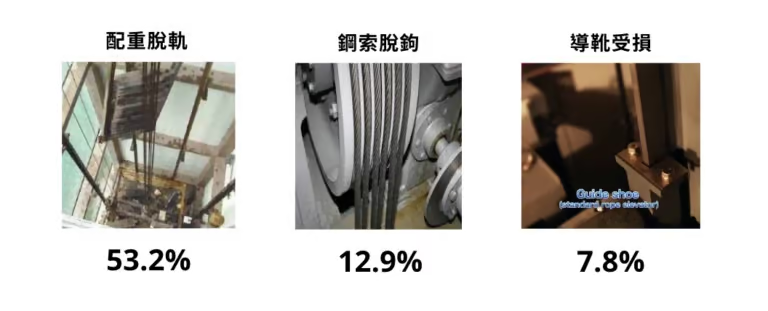
What are the main types of earthquake damage to elevators?
According to historical statistics, about 50% is counterweight derailment, about 10% is cable disengagement, about 10% is guide shoe damage, and the remaining 30% is other issues.
How do most current elevator systems respond to earthquakes?
For the elevator’s own safety mechanism, seismic sensors can be installed to determine whether the shaking level reaches a notification threshold. As for entrapment rescue, emergency alarms, intercoms, and direct phone lines can be used to communicate with the outside world.
Japan, Europe, and the US have even introduced relevant regulations for elevator safety:
Japan:
The Building Standards Act explicitly requires elevators to be equipped with seismic sensors. When an earthquake strikes, the elevator must immediately stop at the nearest floor and open its doors, warning passengers to evacuate—this is also a mandatory item for elevator safety inspections.
The US and EU:
Standards such as the US ASME A17.1 Safety Code and the EU EN81-77 (2018) standard clearly define the response and risk control measures elevators should have during an earthquake, including shake sensors, counterweight protection, and seismic emergency handling mechanisms.
Taiwan is on the same fault zone as Japan, but awareness and adoption of seismic sensors lag relatively behind. Sensors also require precise detection mechanisms and reliable certifying authorities, and the requirement that every elevator be installed makes construction costs relatively high. In recent years, remote monitoring equipment has gradually matured and can also receive earthquake information; however, new elevator installations require networked equipment in the machine room, while old elevators without network connectivity face even more complex challenges.
Advance earthquake warning to minimize disaster impact
The LiftMind elevator intelligence system developed by Owlsome Tech covers the following key features:
Low intrusiveness, broad applicability, and high system integration—aiming to assist the smart upgrade of existing elevators so that all brands and models can benefit from earthquake warning functionality, adopting a more tolerant plug-in approach to accommodate the general public’s elevators.
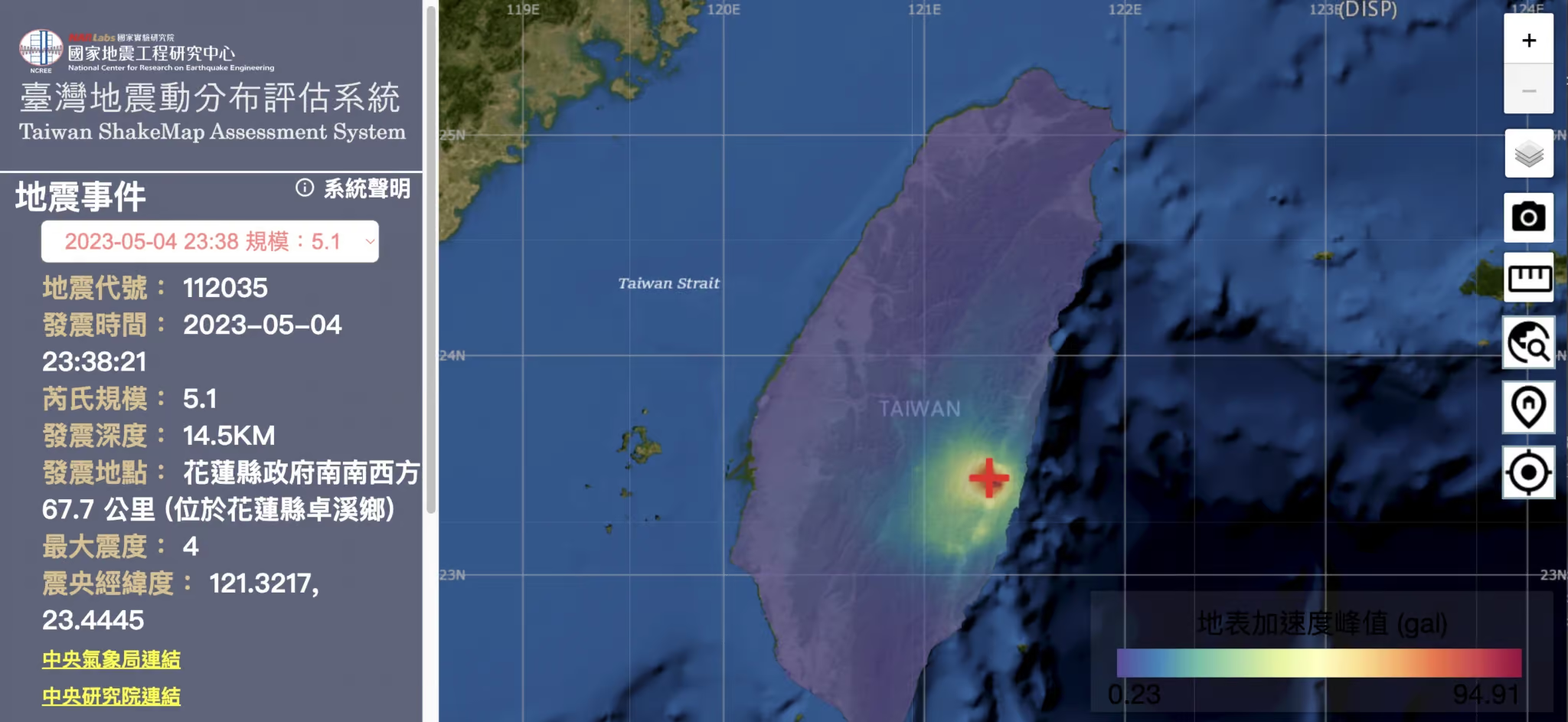
This system integrates the composite earthquake early warning platform developed by the National Center for Research on Earthquake Engineering, transmitting predicted seismic intensity for each region to the LiftMind cloud platform for immediate response measures. In the critical few seconds before an earthquake arrives, corresponding response measures are executed—not only buying time, but also providing a video assistance system for any subsequent entrapment situations.
In the past, when passengers experienced an earthquake, they had to react and press the button for the nearest floor, and if trapped, had to press the emergency call button themselves and wait for rescue.
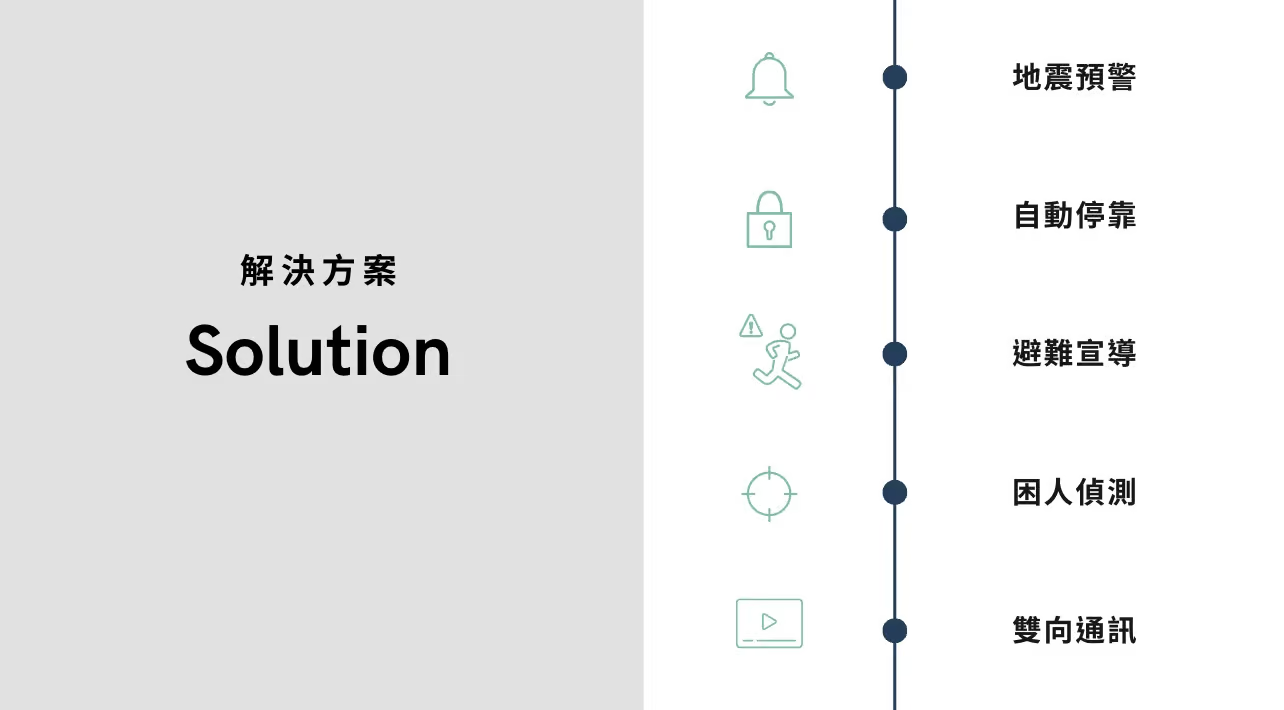
Therefore, our solution adopts the following steps:
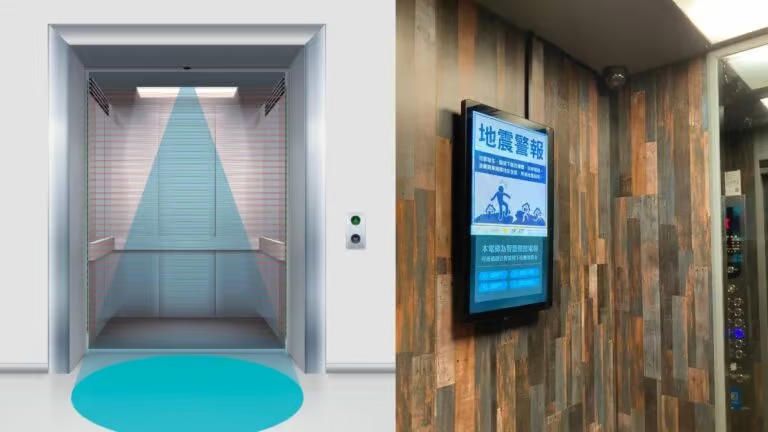
Automatic warning: receives the earthquake warning 5 seconds before the quake, and the elevator immediately activates corresponding measures. Automatic stop: stops at the nearest floor and keeps the doors open. Evacuation guidance: during the triggering process, evacuation notifications and guidance messages are provided. Entrapment detection: if entrapment does occur, an entrapment notification is triggered, sending the signal to the management platform so the operator can confirm the passenger’s condition. Two-way communication: once entrapment is confirmed and the passenger needs assistance, two-way communication is activated to directly communicate with the passenger inside, rather than requiring the passenger to call for help themselves.
Not only does the system proactively respond by stopping the elevator, it also coordinates with display panels to clearly guide passengers toward the evacuation direction. If someone is truly trapped and unable to call for help, the system also detects this and assists in reporting it.
Even a single earthquake early warning system involves so many layers of solutions, because we know that the more comprehensive a disaster prevention system is, the greater our chance of protecting passenger safety and giving owners peace of mind.
Our original intention in developing this was to increase response time through technological disaster prevention and minimize the risk of disaster as much as possible. Our principle is “prevention over cure”—effectively leveraging the advantages of technology, real-time capability, speed, and scientific methods to reduce the risk of disaster.
Do you also have these safety concerns?
Feel free to contact us. In our 2023 field trial program, experience a 3-month elevator upgrade at a more accessible price!
Source: National Center for Research on Earthquake Engineering