
Is Infrastructure Ready to Support the Needs Brought by Taiwan’s Aging Wave?
The aging Taiwan we face
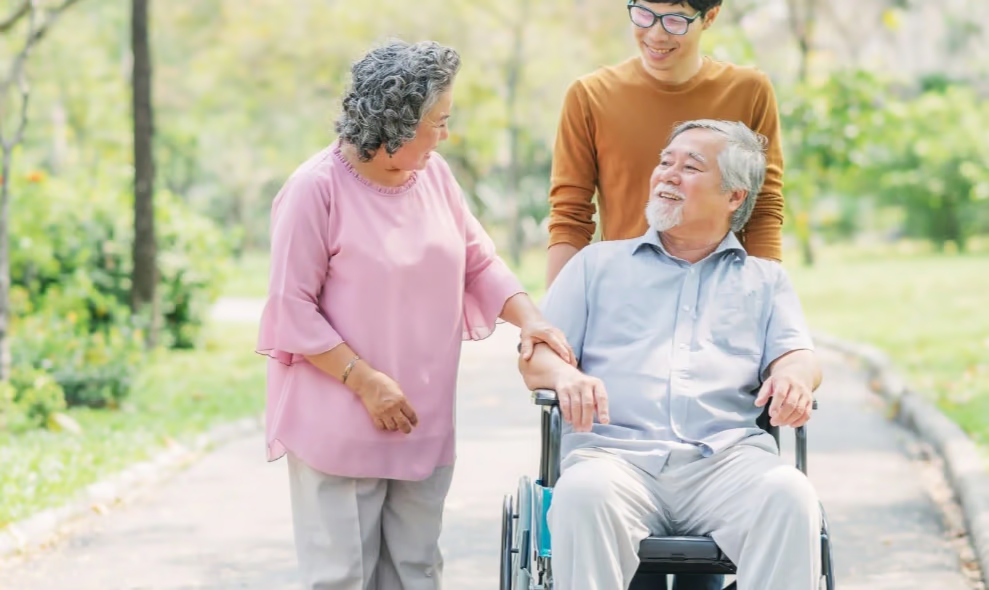
According to the National Development Council, the elderly population aged 65 and above currently makes up about 17% of Taiwan’s population structure, and scholars estimate this will exceed 20% by 2025—meaning a super-aged society is approaching. As the dependency ratio continues to rise, caregiving manpower becomes strained and labor costs continue to increase. How to balance a human-centered approach while integrating technology, so that long-term care and social welfare institutions can improve the quality and efficiency of care, will be an urgent issue to consider.
But is Taiwan ready? Is the infrastructure sufficient to support Taiwan’s aging needs?
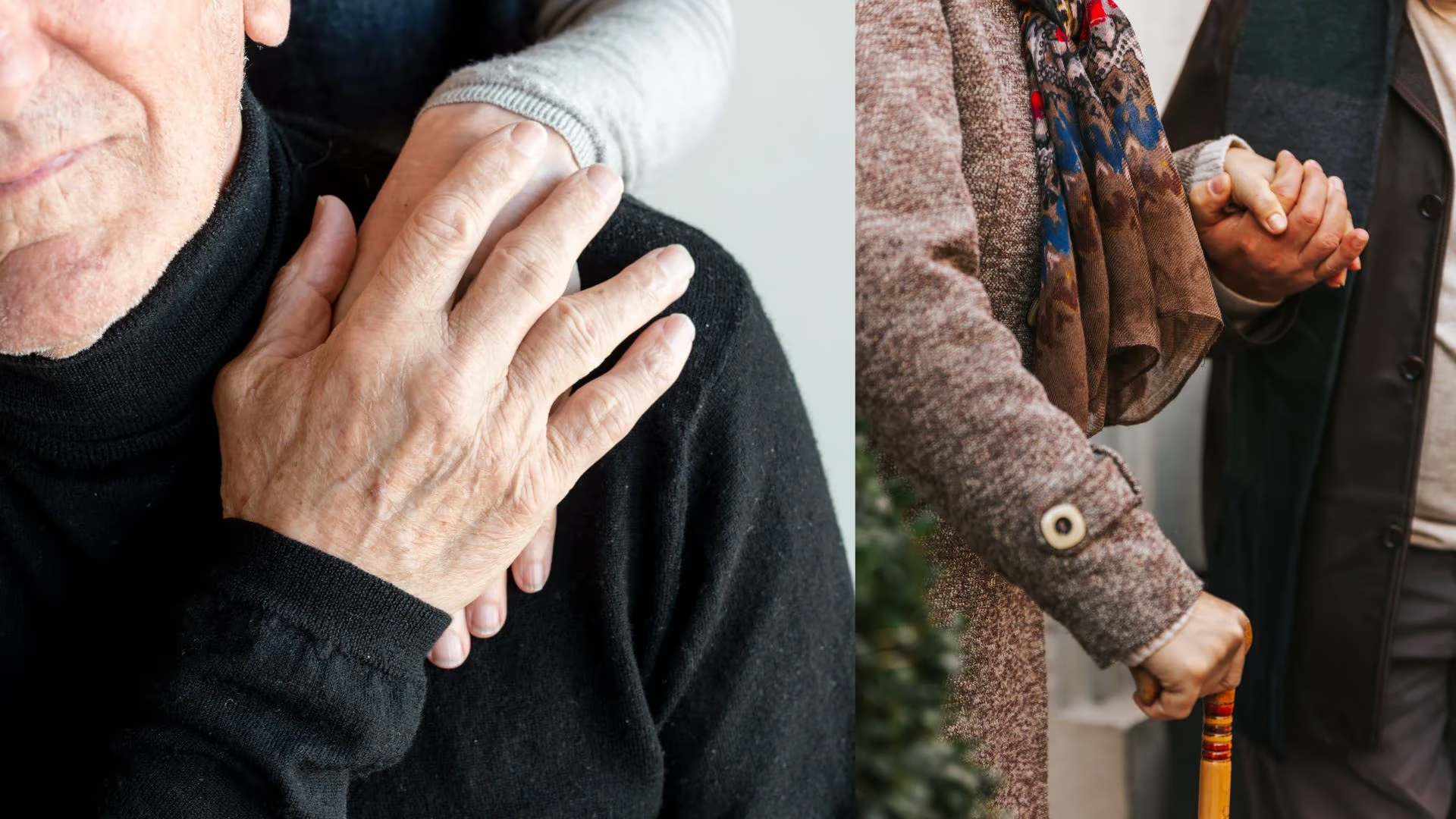
Gerontechnology / Smart Health Care
With the advancement of technology, the rise of AI and robotics, and the development and application of technologies such as IoT, wearable devices, and sensors, the smart health care industry is booming. Among these, “Gerontechnology,” as defined by the International Society for Gerontechnology (ISG), refers to designing technology and environments that enable the elderly to live healthily, comfortably, and safely, independently, and to participate in society.
Gerontechnology is a new interdisciplinary field, different from the medical equipment or assistive device industry—products and services targeted at the elderly include medical staff, patients, or persons with disabilities, as well as elderly people and their children, family members, and caregivers.
The design purpose of gerontechnology products and services is not limited to medical care or disability assistance, but broadly covers overall aspects of life including health, sub-health, home, mobility, communication, leisure, and even work—creating more convenience for the elderly’s lives and echoing the goal of preventing aging.
Currently, there are many related smart health care applications, such as home care systems, smart home rehabilitation systems, elderly companion robots, ambient assisted living, and more. However, elevator applications are relatively rarely heard of. Although elevators are legally required to undergo monthly inspections and periodic review for elevator use permit renewal, this doesn’t guarantee accidents won’t happen. Recent elevator accidents have become frequent (see supplement), and especially for people with disabilities and the elderly who become trapped or faint, they may not be able to easily call for help, facing situations where they cannot call for help or lose consciousness, while elevator management personnel cannot quickly understand the passenger’s condition inside the elevator.

Elevator intelligence can help us monitor safety blind spots in real time
When elevators combine with sensing equipment, we can not only reduce accidents but, as prevention is better than cure, buy us more golden time for immediate feedback. The following sections explain the benefits elevator intelligence can bring:
Smart safety: The active detection of entrapment and incapacitation, and entrapment rescue functions, can greatly increase management personnel’s efficiency in elevator safety management. For example, special groups (such as people with disabilities, the elderly, children, etc.) trapped in an elevator currently need to press the emergency call button themselves and report their condition. This system uses image detection to determine if someone is trapped, sends the entrapment message to a designated security officer, and initiates a video call, allowing immediate assessment and reassurance.
Smart friendliness: The friendliness aspect provides voice control and customized floor announcements, using simple changes to improve the friendliness of the existing elevator environment. For example, wheelchair users or those unfamiliar with which floor a unit is on can use voice control: “Go to floor X” or “Go to room XX,” and reach that floor directly. For new immigrants or people with intellectual disabilities, simply saying the corresponding unit name to reach that floor is very convenient, and it’s also easier for wheelchair users to operate.
Value creation: Can customize functions for individual venue needs, and paired with an electronic bulletin board, can serve as a message delivery platform—for example, customized voice broadcasts, health education promotion activities, rotating in the elevator, and content can be changed quickly based on current circumstances, with visual prompt assistance.
The aging issue has become one of Taiwan’s important agenda items, and the government, businesses, and various sectors of society are actively working on related efforts. How to use technology to achieve safety and a friendly environment with “minimal change” will be a major challenge going forward. Owlsome Tech continues to move toward friendlier elevators, and we’re honored that our developed LiFTMiND system was officially registered in 2023 as a warning, indication, and signaling assistive device, listed in the “Ministry of Health and Welfare Social and Family Affairs Administration’s Multi-Function Assistive Device Resource Integration and Promotion Center,” making the elevator a guardian for everyone.
Supplement:
Elevator door suddenly closes! “Boss lady” of a medical equipment store crushed to death | TVBS News
Shocking! Frequent elevator incidents, suspected building elevator “mechanical failure” | Reporter Wen Yu-Lien, Wang Tzu-Yu
References:
Wu Fang-Ming (March 18, 2019). Smart Long-Term Care, Better Elderly Life. Kaohsiung City Government.
Su Chih-Yuan (February 18, 2018). Smart Health. Chia Nan University of Pharmacy and Science, College of Humanities and Information Application.
Xu Ye-Liang (2018). The Development and Innovation of Smart Technology in Elder Care Applications. Journal of Land and Public Governance, 8(1).