
Exploring the Smart Revolution of Future Cities: Key Elements in Building Smart Cities
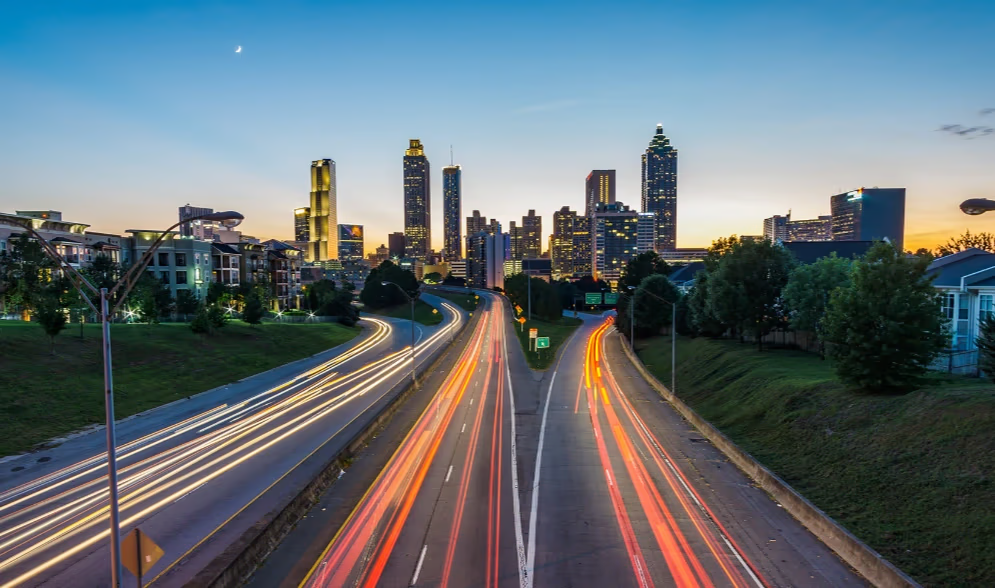
What is a Smart City? What applications already exist worldwide? Let’s uncover the charm of smart cities!
A “Smart City,” sometimes also called a “sensing city,” is a concept referring to the use of advanced information and communication technology (ICT), along with sensors, data analytics, and the internet, to improve a city’s operational efficiency, quality of life, and sustainable development. The goal of a sensing city is to allow cities to be managed and operated more intelligently through the collection, analysis, and application of data, meeting residents’ needs and providing better public services. Today, smart cities are already an indispensable part of development—how to use data, communication, and technology to solve urban problems is a direction that governments worldwide are actively promoting.
What is the concept of a smart city?
According to a CommonWealth Magazine report, the global population continues to grow and concentrate in cities—the UN estimates that by 2050, two-thirds of the world’s population will live in cities. In other words, urbanization leads to overcrowded cities, and the resulting problems need technology to get ahead of them.
The initial concept of the smart city came from IBM’s “Smarter Planet”—a report they released at the time mentioned the concept of the smart city, titled “Smart Planet: The Future of the Internet of Things.” Using IoT, AI, cloud computing, and other tools, forming efficient interaction with a city’s transportation, water systems, power equipment, buildings, and other equipment systems, ultimately improving government efficiency and also improving residents’ quality of life and the city’s sustainable development.
Since then, the concept of the smart city has gradually become widely accepted and applied, becoming an important direction for many cities’ development and planning. Different cities and countries have their own models and innovations in the practice and application of smart cities.
The six key indicators of a smart city
With rapidly evolving technology, the progress of smart city development has also become a key indicator of international urban competitiveness, and smart cities have six major indicators:
- Smart Environment: includes smart buildings, energy management, and smart planning.
- Smart Mobility: includes diverse transportation, green energy, and big data.
- Smart Living: includes inclusive communities, health management, and cultural well-being.
- Smart People: includes smart education, public affairs, and ethnic inclusion.
- Smart Government: includes smart management, citizen-friendly services, and digital policy.
- Smart Economy: includes creating opportunities, industrial transformation, and network connectivity.
Through data analysis, smart cities can achieve various functions and applications, including smart traffic management, energy-saving and environmental measures, smart public services, smart buildings, and smart safety. For example, a traffic management system based on data analysis can optimize traffic flow, reducing congestion and pollution; a smart energy management system can monitor and adjust energy usage, achieving energy savings and carbon reduction; smart public services can provide convenient mobile payments, smart parking, and smart city management. According to SDG indicator 11, which calls for building inclusive, safe, resilient, and sustainable cities and communities, we can see that smart cities are not a new topic but have long been a consistent development strategy.
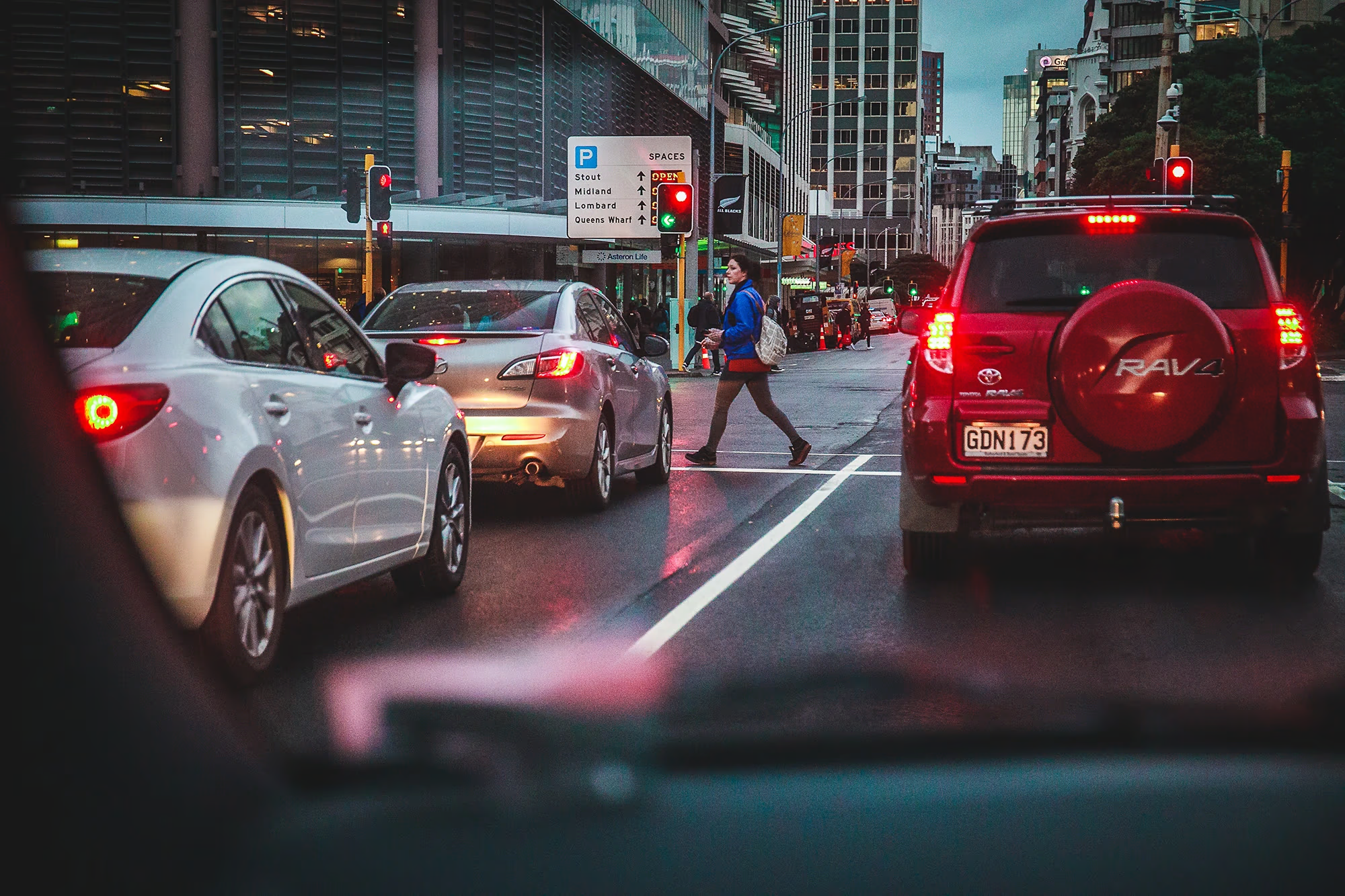
How does smart technology solve urban problems?
Many cities have already implemented the smart city concept and launched corresponding cases:
The most authoritative global transportation research report indicates that in the US alone, traffic congestion caused a national economic productivity loss of over $300 billion in 2018. These losses cover the time value lost by drivers and passengers, increased costs from delayed goods, wasted energy, and other indirect consequences. Undoubtedly, traffic congestion is the primary problem that smart transportation must solve. As a result, more and more sensor devices and internet-connected road signs and traffic lights allow relevant units to use this technology to achieve adaptive traffic control, real-time information delivery, and predictive infrastructure repair to better grasp traffic conditions.
Berlin
Berlin has been actively promoting smart city development, using regions as the foundational unit for urban transformation, with low-carbon transportation, smart grids, energy-efficient buildings, effective water resource utilization, and public green spaces as key nodes of urban transformation.
Barcelona
Barcelona is a pioneering smart city, using sensors and data analytics to optimize the city’s energy use, traffic management, and public services—jointly driving 22 large-scale smart city programs, launching over 200 projects covering connectivity, smart water, smart mobility, smart tourism, and more, to provide a better resident experience.
Taipei
Taipei uses sensors and data analytics to monitor traffic flow and optimize city traffic. The Taipei City Traffic Engineering Office has established 40 AI image-recognition-based “smart adaptive signals” that automatically detect side-road pedestrians and vehicles, dynamically adjusting signal timing and green light duration to relieve traffic flow. In addition, the uninterruptible power system for smart traffic signals set up by Gogoro Network and FarEasTone uses Gogoro Network smart batteries as a power source, ensuring intersection signals remain uninterrupted during power outages. After testing, Gogoro Network smart batteries can keep the traffic signal uninterruptible power system running normally for 3.5 hours during outages, reducing intersection risk.
Smart cities cannot do without vertical transportation
Smart cities shape the future way of life. Our products are a key part of smart city development. As a professional team focused on plug-in elevator intelligence systems, we are moving toward the six goals of smart city development, helping cities with smart traffic management, improving energy efficiency, and enhancing urban safety.
Smart Environment: helps with intelligent management of vertical movement. Smart Mobility: uses big data to collect elevator information. Smart Living: meets CRPD standards, aligned with an inclusive community concept. Smart People: through educational training, helps more owners understand product applications and the possibility of digital transformation. Smart Government: can combine with policy to help the government manage more aging elevator issues and improvement plans. Smart Economy: helps the elevator industry transform, using digital tools to help alleviate labor shortage issues.
For this reason, in urban transformation, elevator intelligence is an issue that cannot be ignored. Owlsome Tech also hopes to lead the way toward smart city development, and our solutions integrate the latest technology and innovative thinking, dedicated to building a smarter, more convenient urban environment for you. Join us in building the smart city of the future.
Source: Future City, OOSGA