
When Energy Saving and Carbon Reduction Become Part of Our Daily Lives | Elevator Intelligence Applications in Healthcare Facilities
Elevator intelligence applications transform the nightmare of hospital elevators
In modern urban life, elevators have become an indispensable part of our daily lives. But have you ever thought about it? Through the application of technology, we can not only make elevators smarter, but also save energy! Let’s explore together how the existing operation of elevators can achieve energy-saving advantages.

Currently, elevator energy-saving methods fall into three major categories:
The key to elevator energy saving lies in optimizing hardware technology and operating modes. Below are some common energy-saving technologies applied in elevators:
High-efficiency motors: Some newer elevators use high-efficiency motors that reduce energy consumption during operation while providing higher efficiency and performance.
Regenerative power devices: Recovering and reusing the energy generated during elevator operation, further improving energy efficiency.
Zoning systems: Implementing odd/even floor or high/low floor zoning strategies to achieve energy savings through elevator zoning operation.
Big data provides a different solution
Below is an analysis of energy-saving results simulated and calculated by our system based on the actual riding patterns at an installation site (a hospital in northern Taiwan, referred to as “Hospital A”):
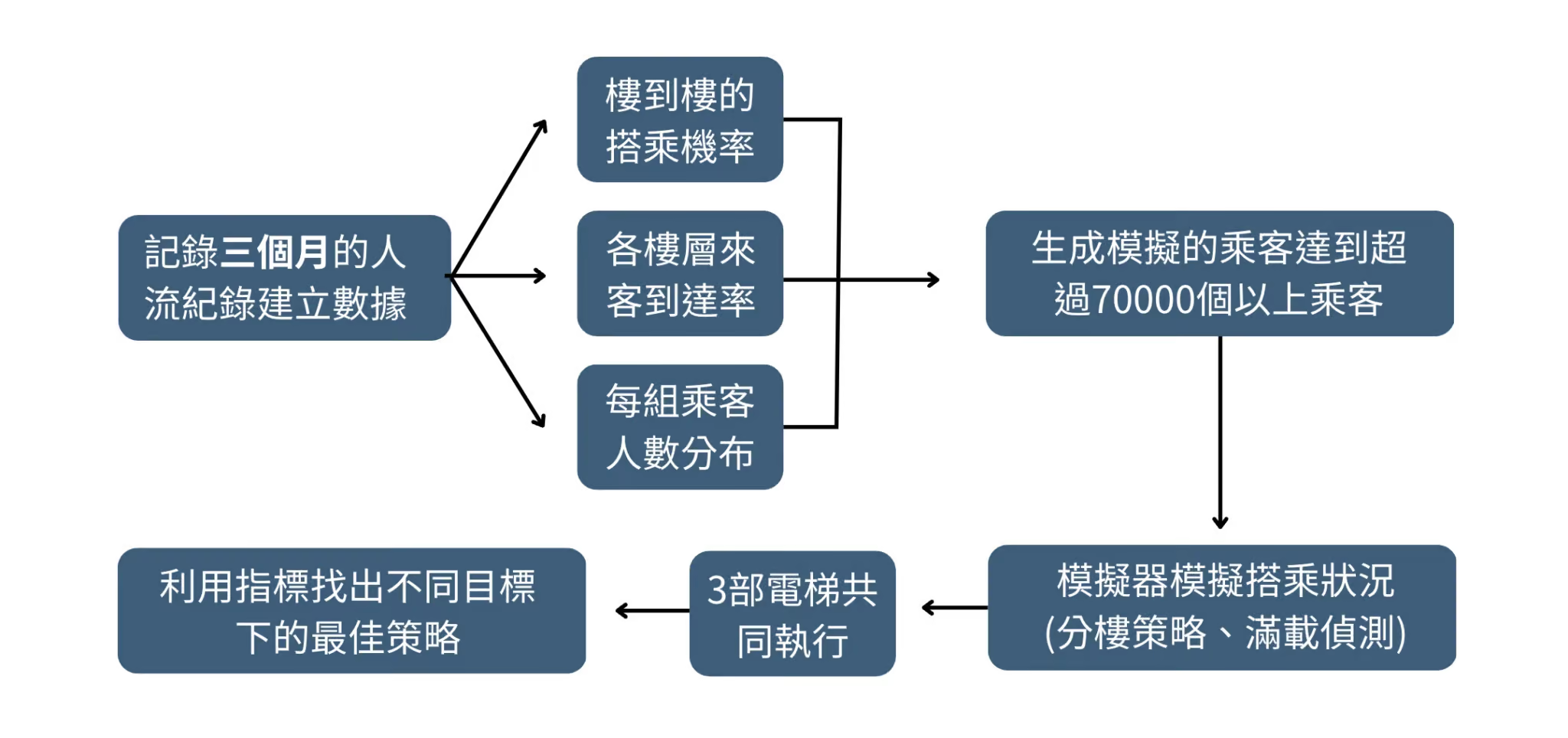
Based on the reference logic above, we calculated two reference data scenarios for Hospital A:

Next, we converted the electricity usage portion of the above scenarios into the following calculation process:

The above represents the estimated number of kWh saved. Based on the carbon emission value of 0.509 published by the Ministry of Economic Affairs, converting: approximately 0.50920520=10444.68, 10444.6830%=3133.404, estimated to save about 1.59 metric tons of CO2e per year—roughly 11% of the carbon absorption capacity of a hectare of forest per year. In addition, Hospital A’s elevators, through “coordinated zoning strategy,” “integrated pre-dispatch,” and “congestion-based dispatch at the waiting area,” can further reduce wait times while achieving optimal energy-saving results! This data is based on simulation results for 3 elevators; looking at Hospital A as a whole, with 10 elevators in operation, the effect would be approximately 3 times greater.

The above system has been installed at Hospital A since 2022, and the machine continues to learn the site’s traffic patterns, while we continue to innovate our software, continuously advancing the smart elevator’s application in safety management.
As technology continues to develop, we will continue to pursue higher efficiency and smarter elevator experiences. Through the application of AI and IoT technology, we will achieve smarter, more environmentally friendly elevator systems. Improving elevator energy efficiency and performance not only benefits the environment but also provides people with a higher-quality riding experience. We can look forward to more innovative solutions to drive elevator energy savings and efficiency improvements, bringing more convenient, comfortable, and sustainable transportation to urban life.